Sunday, January 30, 2022

These old records that haunt our dreams.

By Eino Holm

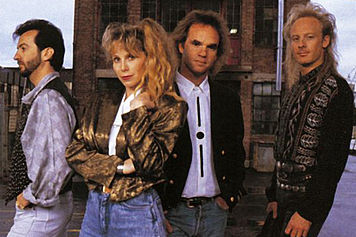
Them's some hairs.


Highway 101 never really got off the ground, even though they had a handful of hits and their first vocalist, Paulette Carlson, has one of those voices.  They were decidedly neo-trad country before Clint Black and Alan Jackson really broke the dam, but after Dwight.  Not really skiing music, when you think of it, but that doesn't matter.  Given some of the $#!@ Matchstick used during the Ski Movie years, one apparently needs to listen to horrible noise with some dreadful misogynistic posturing and terrible lyrics to really send it.  I prefer to listen on the way to and fro, and then just be in my own head listening to the conifer whisper while gettin' after it.  I am sensitive, you know.  An artiste.

Long about Madras, if you grew up like me, you realise this really isn't Kansas anymore.  Nor is it the Wet Side.  That first time was the first time I'd really seen the dry side.  It's open country, sage and bunchgrass; if yer payin attention there are trailers and cheatgrass and truck stops as well.  The Cascades over Blue Box Pass aren't really all that high, yet they are effective orography.  Madras gets a little more than twelve inches of precip in the water year.  If we're feeling poetic, I'd call that a couple drops of trillium nectar north of being Desert.  If we're feeling poetic.  I don't remember Madras at all, other than the Taco Time at some intersection or other.  A popular internet mapping service (thanks, Eben!!) says it's permanently closed.  It seemed to be around dusk, or maybe later, every time we hit town all those years ago.  I still don't know how Ma and Pa could even afford to take a ski vacation, let alone one that today feels as ritzy as heading to Sugarbush on Spring Break from The New School.

From these trips, at least one or two in the old Bronco II, I remember three albums.   Dwight's Guitars, Cadillacs, Etc., Etc., Highway 101's second record, and some to-me unknown Merle Haggard collection that I think, correctly or otherwise, led off with "Rainbow Stew".  Of the three, great though they all are, it's Paulette's plaintive alto that stands out for me.  And, I mean, who can resist a country song with somebody named "Cactus" bangin on them drums?  Not me.  When those high desert lights get to stretching off to the distance, some Mojave dive-haunting honky tonk dripping with Opuntia glochids seems to fit the bill.  Paulette's midwestern roots notwithstanding.  They weren't the most authentic band around, with three quarters of the original lineup being session guys, but since when do most seven year olds even know what that means?  I did not.  Besides, Mr Tambourine Man was mostly the Wrecking Crew, save Jim McGuinn's 12-string.  I merely absorbed that heartbreak, the anxiety, the beat, and importantly, that twang.  Twang and ponderosa are like Athens and a nice Rickenbacker.

Mt Bachelor, the volcano, stands above the plains in the same exact way that every other Cascade volcano south of Stampede Pass does.  This part of Oregon is so crowded, though, that without the association of chairlifts and ski vacations Bachelor remains small.  The Sisters to the north, then Seekseekqua, then Wy'East, all stand taller and more massive.  Broken Top to the north is more complex in shape, and the more remote peaks south of Willamette Pass are just, well, mysterious.  I didn't even know McLaughlin existed until I was damn near 30.  From Mark and Liz' ranch out a little southeast of Bend, one sees a fun jumble of peaks, some 20 or 30, that are certainly or at least most likely all volcanic.  Bachelor, the volcano, is one among many.  To me, a six or seven year old kid, Bachelor was the biggest thing in the world.  It really doesn't matter that Tahoma loomed over Southwood Elementary at home, bigger than life, or that the Root Chakra of the World, Shasta, is even bigger than Tahoma.  Tahoma was local, and for some reason it seems most skiers equate local with somehow diminished and not, I don't know, enough.

All three of us brothers were enamored of their detaches.  At least if memory serves.  Pine Marten and Outback were quads, early Doppelmayrs.  (Pine Marten has since been updated.)  Summit was exotic.  At the time, it was a Doppelmayr triple, one of the earliest detaches out there.  Sure, sure, Byron and crew built detachable mining trams in the 19th century, but, you know, video or it didn't happen.  Summit had faded green slats for the seat back, ran at whatever speed they did then, which was slower than me when I wanted to carve power-wedge Beverly Hills at Mach 7-Year-Old.  We were comparing Pine Marten to Rex, an early Poma detach, which today seems silly cos both are just fine, but then seemed like no comparison at all.  Doppelmayr FTW.  I think the entirety of our experience was that Bachelor was new, and distant, and fancy, and like, Pole House #2 in Sunriver was tops, whereas Rex was local.  That misapprehension again, that anything local is less than anything distant.

I remember the view from that little loft bedroom, looking directly at Bachelor in the Central Oregon sunrise.  Lowland ponderosa fading to montane Tsuga.  I remember Monday night wrasslin' on the cable TV.  That old Bronco II that Ford decided to resurrect but not really.  Battleship. Spaghetti and French bread.  (Why is that a thing in the States?)  J-O dropping his glove off Rainbow and never finding it.  Sidestepping up to Summit, tryna huck all my 50 or whatever pounds off the rollers on Cliffhanger, or hitting Boomerang under the Outback chair after lunch and finally understanding moguls--I thought; I was 9.  Hot chocolate with cinnamon at the Pine Marten Lodge.  These things we build into mythology when really they're just things.  A good turn or two.
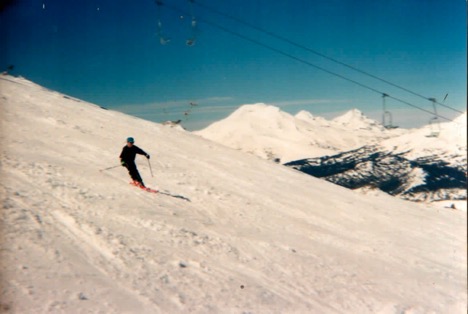
The old Summit triple and J.O., late 80s


Vince Gill's When I Call Your Name is the Snoqualmie Valley, heading up to Stevens.  The 4th movement of Brahms' 1st is Alpental.  The Desert Rose Band's True Love is the 2.30 employee bus down from Crystal in a last-gasp inversion, late February, parking lot dust on the floor and that one suicide lane by the mill, the one I'd use on tourists who were tailgating me.  I'd slow just enough that they'd get even closer, antsy to get to Enumclaw and whatever it was they NEEDED to get on to beyond that, like the Ski Inn or 169 or Renton (It's Ahead of the Curve!) or whatever, and at the last chance I'd slide left into the middle lane and all that dump truck dust from the the gravel pit would explode and when I could see them again in the rearview, they'd be a handful of car lengths back, whatever important thing they couldn't wait to get to not quite as important.

-

Axel Jaffee passed away a few years ago, I don't know, 8, 10, 12 years, somewhere in there.  He (along with my friend and co-conspirator Dustin) taught me to swear.  He also was in his 60s when we carpooled my first year bumping chairs.  Dustin and Peter and I worked with Alex over the summer, after the storied Winter of '99, and in the fall Axel and I were buddies.  He had an old, slow, two wheel drive short-bed Ford pickup in faded white, with sand bags in the bed between the wheel wells and the cab for traction.  I had my front wheel drive '81 Tercel 5 speed.  I think my snow tyres cost $25 a piece including studs.  I never did get that car stuck.  Anyway, Axel, he had maybe two records in that truck.  Don McLean's American Pie, and then his "buddy" Julio Eglesias.  No clue what that one was, but it had "To All the Girls I've Loved Before" with Willie Nelson, and I just couldn't take it.  I'd tune out and watch the Pseudotsuga and lowland Abies slide by, hoping it'd turn to snow before Silver Springs.

That winter, '000, I was pretty certain listening to female singer-songwriters would draw me closer to either of the two women I couldn't get out of my head.  (To this day, I am grateful they tolerated my utter uselessness and that I still get to call each a good friend, distance and time changing all in its path.)  Along with Jonatha Brooke and Tori Amos, I had Mary Chapin Carpenter's Stones in the Road stuck in my craw.  Axel for some reason would think the volume in his truck was petering out after the first song, even though the song had simply ended.  He'd turn the volume way up, uncomfortably high.  The second song, "House of Cards", starts with a loud kick and snare, and those tiny speakers always sounded broken.  I'd commandeer the volume knob from there, until the next time we'd listen to the record when he'd do it again.  

That winter wasn't particularly big, especially since it followed the Big Winter of '99, but we still got good snow for most of it.  Many cycles we'd get snow down to the river.  There was snow in Greenwater most of the season.  It passed like all those conifers bending under their blankets, the dark stands of timber my buddy Todd calls "killin woods".  I never knew if Axel actually liked Stones in the Road, or if he simply tolerated it cos it's a fairly straightforward record, easy for the uninterested to tune out.  I still enjoy the record, and some of those mid-90s social commentaries still resonate.  I still laugh inwardly every time those twin drum beats hit.

If I was driving, if Axel was in a talkative mood and I wasn't, I'd put Tori Amos or Jonatha Brooke on, and those soothing voices would put him to sleep.  Usually by the Sand Flats, at latest by the bottom of the Boulevard.  I know I have been driven like the snow. . .

-

The next Winter, I bumped chairs at Baker.  I'd headed to Bellingham to finish school, AA under my wing and a BA in writing on the horizon, but life gets in the way sometimes.  This one lady, Amrah, we were talking at the bottom of 5 one day, making a list of pros and cons.  It's funny to think that little list led me here, out in the desert, 21 years later, but that's definitely the way these things tend to go.  

I'd attempted to register for Winter quarter, but some compounding mistakes on the colleges' part--with some ignorance and a lack of curiosity on my part--added up to me being without actual admission credentials.  When I asked why I'd been able to register for class back in August, the dude at the registrar's office sighed in a condescending manner and, Eino-phrasing here, said, "D'uh! We give you a quarter's length grace period.  Yer sposeta figure it out."  I asked why no one had let me know that I was derelict in whatever it was, and he just said it was my job to know or find out my status.  Turns out GRCC hadn't shipped my transfer degree/AA up to Western, only a class transcript.  I'd only been admitted to Western on state transfer regs, so classes and grades (3.49 gpa) and strong SAT scores be damned, I was only accepted to University based on token agreements.  After hanging my Grandmother's old cordless landline in its cradle and gassing up the GL, I high-tailed it the 115 odd miles south, grabbed my degree, then headed back north.  In the morning, I got my admission straight, but I was at the back of the line, and missed out on every class I could have put toward this phantom writing degree.

On the cons side, Amrah wrote "harder to restart than continue," and she could not have been more correct.  I took Winter quarter off to ski.  Now I'm a 40-year-old English major with no actual credits toward that major and no fancy paper to back my hubris up, but with, I don't know, 1500-odd days on snow and countless turns, and the memory of Amrah rewinding Dulcinea over and over on the tape deck so she could hear "Something's Always Wrong" again, and again, and again, them killin woods slipping by in the dark.  I only had a few cassettes in that red GL wagon.  Ropin' the Wind, August and Everything After, and Dulcinea.

In among the decent snow that January, Amrah, some dude named Andy from Mount Vernon who did. like. binding repair or fry frying, and a lady from South Africa whose name is escaping me, and I had time to take the Tsawwassen ferry over to the Island.  It's an incredible ride, across the more northern/less western of the two northwestern-most corners the lower 48, through the Gulf Islands, landing at Schwartz Bay on the north end of the Saanich Peninsula.  It was cold, wet without any rain, and we huddled on the deck so we could watch those mysterious islands drift past and the gulls ride the ferry's slipstream.  We slept on the floor of a float house in Victoria's Inner Harbour, owned by I think an older woman who had at some point dated the lady from South Africa's Pa at some point in the hitherto.  Or something like that.  The gentle swells of the Inner Harbour, combined all the driving I'd been doing as the sole owner of a car, knocked me out early.  In the morning, we headed back east.  Across the water and up the Nooksack, through all that endlessly deep conifer wood, up the lower Arm to the E-Lodge, and then I don't even know where one of those kids is.  In the three days off the hill, I'd missed three days of skiing.  The next winter, I decided that wouldn't do, and by July I'd been on snow 127 days.  I only missed possible ski days if I was anærobic from too many days straight in the deep.  800" in a season is not a time to be gallivanting, and so I did none of the sort.

At the dock in Tsawwassen, there were giant screens to convey informations and entertainment.  (I will not utter that most horrific of portmanteaux.) One could tune the car radio to the correct FM station, and the audio would come alive.  Or that's what the ferry folks wanted.  That day, they just looped Our Lady Peace's "In Repair" for the entire two hour sailing wait.  It's not a bad song, and I still enjoy hearing it every year or two, but that's a lot of repeats.  Maybe that's just how the Canadians do.

-

School of Fish's Human Cannonball is driving the ol' puke-orange Tercel up Chinook in the Spring, nothing specific lyrically, just full throttle alt-rock that fit in during the Grunge era.  It was loud, a little off-kilter, much distortion.  Those hairpins and Abies lasiocarpa.  I spent my 21st up there, shuttling road shots with John John Rutherford's Pa, John Rutherford.  We got after it pretty good, skiing from morning until almost dinner time.  The last time climbing into the GL, my left hamstring locked up like I was still playing football.
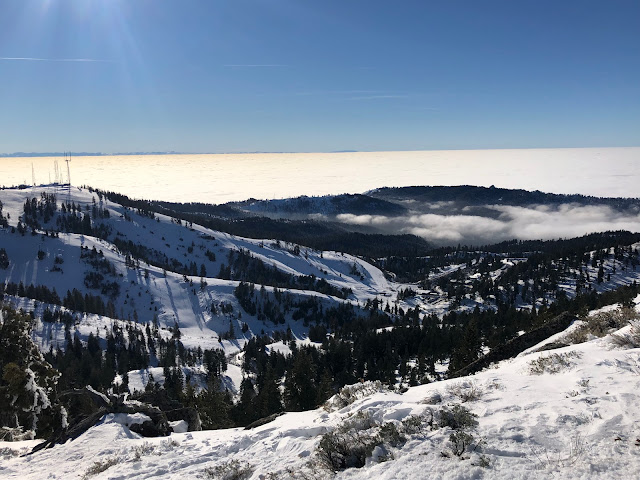
Way up here, it's crystal clear.
(That one corner's hiding down there, just above the soup. Behind that one Doug fir.)

The Turnpike Troubadours' albums, all four, hit pretty hard here in the desert.  I don't care why.

Turning the corner above the new Stack Rock trail, that goofy 90 degree left, where before the trail, you'd find less expensive cars and some Fred Meyer winter clothing and $8 discs or garbage bags, you'll now see a new Defender in amongst the new Outbacks and new F250s.  The awkward, less-than-thought-out jargon for the corner was "Ghetto Sleddin'".  Today, with the addition of a trail, it's a "trailhead."

Evan Felker's plaintive voice and Kyle Nix' roughly, expertly sawn fiddle, I don't care what day it is anymore.  Sometimes it's above the capping layer, sometimes it's puking, some days it's just mare's tails and faded blue denim above.  Ponderosa mixing into the struggling, mistletoe-addled Doug fir.  The country was cold, with the sun westward sinking; it's good to be back in this place.  My hands around a Belgian-made Brownin', my mind on the lines of her face.  Experience.  Something off-handed, but still meaningful.  McMurtry's "30-year crush."

The dying fir slides past, if there's some snow I'll goose it just a bit to try and egg the engineers over in Shibuya City on a little, hope I can get sideways before the ABS stabs at the rotors and that stern voice says NO FUN FOR YOU.  "How good does it feel?!"  Sometimes I slip that CD in cos a) I'm old, now, and b) dag, it sounds good.  It hurts, too, sometimes.  Yesterday, I was droppin the knee for a third of the Throne per turn, 8-10 new and the maze at the bottom of 6 overfull, Pa laughing at me and also--hopefully--with me.  "The whole line was watching, you know."  Today, I'm 40, mysterious knees draining my youthful impudence.  I'm afraid to drop the knee at all.

The punchline to the joke is that when I hear Evan sing "you belong in these hills," I'm seeing Grass Mountain, and the Sisters, and Carbon Ridge. Corral Pass, and Suntop, the White and the West Fork, Lonesome Lake and the Dalles.  Governor's Ridge, and Yakima, and Naches, and Sheep Lake.  The upper Silver Creek drainage and the King.  Pa quoting Clint Black.  The lights are on, but nobody's home.

- -

Title from Zoë Muth's "What Did You Come Back Here For?"
Wednesday, January 5, 2022

Complaining About Arthritis (Part 2)

By Amy Post

My first day on snow this season was delightful.  I skated to the chair with a spring in my step, felt that little bit of exhilaration as the chair scooped me off my feet, and I giggled as my skis slid along the snow, all the way to the top of Showcase.  I was even more thrilled when I was able to make turns, top to bottom, without pain in my knees!

Even though it was fun, the first few runs felt a little off, technique-wise.  But they always do, the first time back on snow each season.  And now I’m skiing with an old injury, active arthritis, and a higher level of pain.  So, I experimented with different ways to turn my skis in order to not aggravate my knees.  If I don’t bend my right knee too much, it doesn’t hurt too bad.  Meanwhile, my left knee woke up and started barking at me, reminding me that it too has arthritis.  But after a few runs, that knee settled down and worked the way it’s supposed to.  I discovered that if I muscle through my turns, my knee hurts a lot more.  But if I focus on actively releasing the opposing muscles, my body picks up the slack and engages the necessary turning muscles just enough to make the movements, without as much pain.  With some feedback from my colleagues, I was back to symmetrical, dynamic turns by lunchtime.

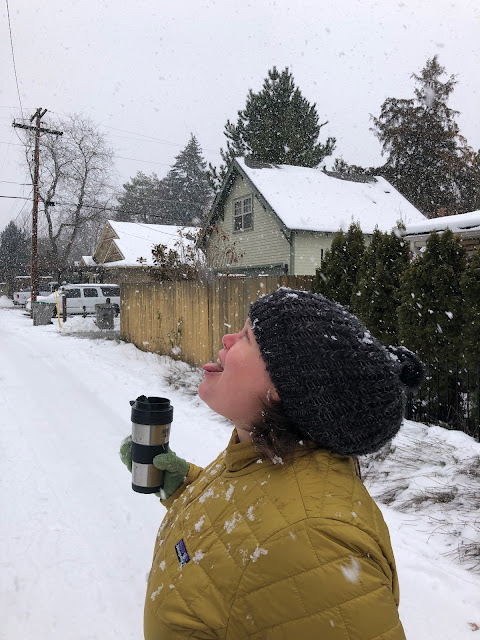
Catching face shots in the neighborhood.

The first hour was almost pain free.  But during the second hour, my bad knee started to ache a little, a few twinges here and there.  Before I went to the mountain that day, my plan was to make a few runs and just see how it went; stop if I hurt too much, ski a few if I felt good, and if I ended up skiing for a few hours, bonus!  So, I thought about going home at lunch time—you know, quit while you’re ahead—but I decided to stay for the afternoon session.  As we started the afternoon, I was pleased that my pain didn’t spike on the first run after lunch.  My pain often reveals itself once my muscles cool down, so taking an hour-long break can sometimes be really uncomfortable.  But my knee didn’t feel any worse than it did right before lunch, so off I went!  Skied awhile more, started to get a little more sore.  But I was skiing with other instructors, so there was lots to focus on besides my knees, and we were standing around talking a lot too, because that’s what we do.

About an hour into the afternoon session, I noticed that I was starting to brace against my outside ski by making my outside leg stiff.  I do this when I start to get fatigued, my knee starts to hurt a lot, or both.  Actually, it is a vicious cycle, because knee pain shuts down quadricep function and lack of quadricep strength causes knee pain—one of the many gems I’ve taken away from physical therapy.  Once I notice myself bracing, I actively work on relaxing those muscles instead, which makes better turns anyway.  At one point during the next few runs, I bent my knee in a way that made me yelp with pain.  I think I skied one more run, but was getting to the point where I couldn’t stop bracing that outside leg, so I called it a day.

Even though my knees were screaming at me on my way to the car, I forced myself not to limp and iced them immediately when I got home.  I was on a high for the rest of the day and the next from the joy I felt because I got to ski.  Plus I got to ski almost a full day without unbearable pain!

The next day, I woke up and my knee was 3 cm larger than my other knee, and it hurt like hell.  I couldn’t walk normally and spent the rest of the week icing, elevating, wearing my compression sleeve, and pouting.  Today, a month out, it’s still not back to where it was before I skied.  For two weeks, stairs were impossible, even going up.  My knees have disliked walking down stairs and hills since I first injured them 20 years ago.  But I’ve always been good at the up.  Even when I’m out of shape, I can hike up a hill like a Gelada baboon.  (As opposed to the clichéd mountain goat.)  But not right now.  By now the swelling has gone down and the pain is less, but stairs are incredibly difficult.  That’s a problem.  It’s one thing if I can’t ski; even though skiing is an important part of my identity, I know that I can have fulfilling life without skiing, even if I don’t know what that looks like right now.  But if I can’t get around because I can’t handle stairs, that’s a real problem.

Here’s a few things I’ve learned lately.  You guys, I have chronic pain!  Maybe that sounds obvious, but in the past, I have not thought of my pain as a chronic condition.  It started when I was 18, got really bad for a few years, then I learned to manage it and did OK for about ten years.  Then it came back and has steadily been getting worse for the last five years.  I don’t know what I thought it was before, but I guess I just always hoped it would get better and go away.  I always thought, if I got stronger, fitter, lost x number of pounds, ate the right food, or found some magic fairy dust and learned to fly, my knees would feel good, even though I also knew that my patellar cartilage was damaged and degenerating.

A recent episode of the podcast Ologies featured an interview with Dr. Rachel Zoffness, a pain psychologist.  (She also has a book that I ordered and haven’t started reading yet but it looks very good.  Link here and at the end of this post.)  The interview made me realize that I am dealing with chronic pain, which requires a unique approach.  She approaches pain with a three-pronged method; bio-psycho-social.  That means that pain is influenced by biological, psychological and social factors.  So, for example, when I first left Utah and was going through a mental breakdown (I believe the medical term is actually “acute stress disorder”), my knee pain came roaring back.  Intense psychological stress increases the pain signals in your brain to “danger, danger, danger!” levels all the time, even if the stress signals are from a separate, physical injury.  Alternatively, when I’m skiing with friends and colleagues, it’s easy to ignore the pain because my brain is in a happy social mode.

Most astonishing, I learned that chronic pain tells you to do three things; isolate, stay home, and don’t move.  This is a survival message in response to the pain.  Which is pretty much what I’ve wanted to do from about 6 weeks post-surgery when my physical therapy started to hit a wall.  She also said that this message our brain tells us about chronic pain is a lie, and that being social, getting out of the house and moving are the best things for chronic pain.  The thing I most appreciated about the interview with Dr. Zoffness is that she told me that the challenges I’ve faced since my big knee injury almost three years ago are, well, normal.  Sucky, but normal.

The last time I went to physical therapy, Rob said he thought it might be time for surgery.  When your physical therapist says it’s probably time for surgery, uff, he’s probably right.  I had an MRI last week, so that may give me some useful information.  (I wanted to do the MRI in October, but then I got COVID, and then it took almost three months to get it pre-approved by insurance.  Grr.)  My knee is a lot better now than it was a few days after I skied.  But I’m scared of the pain and doing anything that might cause weeks of swelling.

It’s hard to end these types of essays.  I want to end on a positive note, because that feels like the appropriate arc when writing about something disappointing.  And truthfully, I am still optimistic about my knee health and the future of my skiing life.  But I don’t have any answers yet, and right now I’m in the shit.  I haven’t skied since that first day back on snow this season.  The pain has reduced to an intermittent sharp pang in my knee cap when I bend it under load, an ache during and/or after activity, and an unsteadiness on stairs.  So, I might try going skiing later this week and really limiting myself to a couple easy runs.  This time, just for a little while and take it real easy.


Sources:

Zoffness, M.S., PhD., Rachel.  "The Pain Management Workbook: Powerful CBT and Mindfulness Skills To Take Control of Pain and Reclaim Your Life."  New Harbinger Publications, 2020.

"Dolorology (PAIN) with Dr. Rachel Zoffness."  Ologies with Alie Ward, 10 November 2021.

Thursday, December 30, 2021

Grew up somewhere, far away

By Eino Holm

If I were to list the entirely subjective Best Terrains Ever To Schred and Also Do Other Skeenings, the list would go something like

1) Snowbird, 2) Crystal, 3) Alpental, 4) Bachelor, 5) A Basin, 6) Baker, 7) Solitude, 8) The Place That Shall Not Be Named, 9) Brighton, 10) Loveland, 10) Monarch, 10) Copper, 13) Sun Valley, 14) Alta (too many damn traverses to be any higher), and then a whole lot of other places.  I have not skied in the Sierra, the Tetons, Southeast Idaho, Maine, Montana, New Mexico, or like, Indiana, so my list is woefully inadequate.  The skeenings, though, I couldn't rank them based on any one thing, not even something so important as terrain.

From Silly Season through about Thanksgiving every year, media of various sorts--even as not-skiing as Business Insider--throw up breathy rankings of places one should ski, usually based on metrics like snow quality, terrain quality and variety, views, lifts, food, lodges, lodging, glitz, glamour, perceived cool factor, something called "value," and places to take the square photos.  Often, they use skier surveys of all these important and not-so-important factors and tally up the results in a nice pseudoscientific package and then run short blurbs with flattering photos and super intelligent quotes like, "My 5 year old really likes the colour of the lifties' jackets."

I definitely know that there is more to skiing than just skiing, else I would doggedly fight to live near one of my top 10 rather than here in the desert near a 501(c)3 that may or may not have exactly what I want.  What I don't understand is how the lack of nightlife at places like Alpental or Monarch or Saddleback matters one bit.  The skiing is better, subjectively at least, than Breckenridge or Sun Valley or Palisades.  All three of the former are more expansive, have bigger and more modern lift fleets, likely better food, nicer shitters, maybe paved parking and shuttles directly from airports.  What places like Black Mountain, NH, and Discovery, MT have that fancy joints don't is air to breath and room to believe.  

Terrain quality is such a subjective measure.  How a run or a specific line feels and skis is different person to person, storm to storm, year to year.  For a good few people--I'd venture the vast majority of folks who pay for tickets and lodging and foods and plane tickets--the quality of grooming and the mellowness of the pitch matters most, so somewhere like the Skyliner Express at Bachelor is tops.  For many bums, especially the more self-conscious among us, the appearance of radness matters most.  Places with Amphitheaters of Huck, like the Palisades at, um, Palisades, or Corbet's at Corbet's J-Hole, or the Cirque at Snowbird, or that one run under that one chair at Mad River Glen.  I tend to look for those steeps and chutes and such, and even tend to ski better with an audience, but there's just something unmatchable about a deep-day line in the The Void at Mt A.  I've forgot exactly how to get in there; if you know, you know.  I remember rolling along under those huge Abies x shastensis and Tsuga mertensiana.  Spiritual, if you're okay with me getting a little Ashlandy.  If I'm truly honest, I do not recall the exact pitch.  I'd say somewhere between partly to mostly steepish enough.  The gliding, settled turns, the accidental drop off a downed hemlock, just keep turning until you hafta push some snow over the bank to sorta ride down on into the flat landing of the back lot.

Some terrain takes imagination.

There is no Gaffney's Numerical Assessment of Radness for terrain.  It changes depending on the company, the need to impress or downplay, the conditions, time of day, or one's conditioning.  Shot 8 at Alpental, for instance, might run somewhere well north of 50 degrees up top, but depending on the company, it might just be a nice pow line.  For me, to be clear, it's the steepest $#!@ I have ever skied, at least for longer than a turn or three.  Given the handshakes, fist bumps, bro hugs, and tequila shots (no thanks) I was handed after dropping the knee in full view of the bar at closing, it is above most folks' pay grade.  I was gripped, a little disappointed in how I skied it.  Matt, Hugh, and Catherine all dropped in confidently, made solid turns, slid nothing.  I, um, got down.  Once I was in, and comfortable, I got better, especially once I had passed the pinch and the pitch mellowed a little, to like, 49 degrees, then my knees unlocked and I opened up, back to the strong tele turns I made on all other pitches at that youthful point in my life, but I still want another crack at it.  Wanna do it right.  Whichever gear is on my feet.

-

Early in the season, most seasons, I am reminded just how subjective my assessment of terrain is.  This morning, on Morningstar at Bogus, I thought "Ooh!! Ima come back here when there's more snow!!"  And then I laughed, cos Morningstar is a groomer, on a beginner chair, short in stature and long on ease of use.  This, this nugget of truth, is what we are all drooling about after three shitty beers we stole borrowed from the cooler at Sean's trailer at about 6.37 pm on closing day.  What Tyler Childers is always on about, or Annie Lennox, or Charlie Parker, or Anton Arensky--the ephemeral, the unknowable, the beatific.  The entire point (such as it is) of the timeless and timelessly overrated On The Road.  We are not meant to know the mystery.

-

Fog rolls in.  Well, as NOAA says, the stratus deck.  Anyway, the statute of limitations is probly passed here, if there is one.  We're talkin' oh-nine, or oh-ten.  At any rate, I can't see much beyond my skis, but I've studied this line a good bit.  A couple slots uphill of Banana Chute, definitely under the rope.  No one is around, and I'm hoping for good luck.  I don't know if it'll slide, or if Lisa Poncelet or Chet Mowbray (good) or some jackass first year I've never met (bad) will be making some sorta rounds underneath.  If it is someone I know and like, like Ms Poncelet, I am unsure of how to proceed.  I know the position I'd be putting her in.  Better if it's just me and some sluff.  At this remove, 12 or 13 years, I don't remember what skis I'm on.  The illicit nature of my turns gives me a giddy little shiver, I smirk a little with smugness, but really, it's just a nice, steep ramp, and then a really nice apron, and then try not to pancake on the Gap Road.

Some terrain gets skied by gnomes.

Kirkwood has some of these lines.  Crystal has some others, too.  Baker, well, you better f*##&$in' know where you're goin'; just cos it ain't closed ain't mean it really goes for us mere mortals.  Some joints (Crystal, Kirkwood) have lines management is too lazy or too inexperienced to control.  Some, like Loveland, have lines that are slide paths directly above major highways, and thus closed for the greater good by faceless folks who in this specific instance really do know better.  Rock Face, Kemper's, The Cirque, et al, they go, they ski with some oomph, don't harm no one din't wanna be harmed.  There's always some excuse, like the Forest Circus or or the Park or whatever, but really, look at J-Hole.  They opened the gates, nothing changed except Doug Coombs stopped being prosecuted for being, well, Doug Frickin Coombs.  Crystal had more than they have, and JK gave it up for a gondola and some fur coats.  Kemper's was the best pow line at Crystal.  I will never forgive, nor will I forget.

The other side of this very valuable coin is a place like Bogus.  Nothing is closed, but then, nothing is the neck-deep, triple-overhead, either.  It's up to the skier to get rad, to find that one turn hidden skiers' right of Hidden Valley, the one that doesn't go but does anyway.  Bohemia, with their "triple blacks".  I'd venture it's just some trees and rocks, à la Pixies or TLC Trees at CM, but, you know, Michigan.  Goods, but marketing jargon instead of full honesty.

-

It's easy to extoll the virtues of places like Whistler.  Big, open, huge, terrain for days.  One can't hope to ski all that on one vacation.  It just doesn't matter.  I know, deep down and superficially and everywhere else in between, that I am a tin hat repeater who wants everything to be just so, while doing nothing to make it just so.  I am the cynic, that apocryphal man of Oscar Wilde's nightmares who knows the cost of everything and the value of nothing.  I'd venture that one cannot know value without knowing cost, but all those marketing folks and Ashlandy dreamers and God knows who else say otherwise.  Still, Whistler, big, bad Whistler, does not matter.  And yes, I have actually skied there.  The mountains, the terrain, the vert, the vista, it's all there, with bells on.  It still just doesn't matter, in the same what that Bougie Skis Magazine's Annual Top 27.8 Ski Areas To Wear Stretch Pants After 4 PM list doesn't matter.  Terrain is what is under your feet.  It can be Buck Hill, Iceland, Aoraki, Sölden, Blue Hills, MA, or wherever you lay your skis down.  Really, truly, wherever you lay your skis down.  The hype, the marketing, the measurements and pseudoscience, just ignore it.  Pull them skis off the roof, or outa the trunk, whatever, lay em down gently, step in with authority, and ski off.  However you usually do.


Title from James McMurtry's "I'm Not From Here".

Friday, December 17, 2021

Overheard at St. Moritz last weekend

By Amy Post

"We should get a bunch of goats and name them after ski racers."


By Amy Post

Friday, December 10, 2021

Strange, how hard it rains.

By Eino Holm

My first real job was at James Oil in Enumclaw.  Jeff told me I needed to stop standing around with my hands in my pockets cos I didn't look confident enough.  I am still not real certain why it mattered whether or not a timid 16 year old looked confident when all he needed to do was take a handful of cash and a few credit cards and then count out at the end of the day, but there you go.  Jeff isn't actually that much older than me, maybe 15 years, but he and I are decidedly of different generations.  He treated me well, though, for my entire tenure.  One time he got mad that I applied for unemployment from a different job, so he gave me a sizable raise and more hours.  I'd call that a win.  Also, I still like the guy.  He was always patient with me.  I can be a slow learner.

The evening of Wednesday, 25 November 98, was like many any good Puget Sounder will recognise.  Wet, of middling temperature, hard to really tell what is going on above with the low ceiling and the continual moderate rain.  If you haven't experienced a good November rain in Puget Sound, it is not like one that you'd imagine from listening to Guns and Roses.  It's also not particularly cold.  You cannot see it.  Believe me, I have tried to make video of it for folks here in the desert, and have failed repeatedly.  Ken Kesey and GM Ford and Jonathan Raban and Earl Emerson and so many others have tried, but the best description I have found is Tim Egan's drip, drip, drip.  I was working at the station that evening, standing under the tall awning, next to the two pumps.  I could see the dimples in the puddles from the rain, watch the puddles slowly grow until it looked like all of Griffin was one conspicuously straight-sided, shallow lake.  It occurred to me somewhere around closing that it had started raining the day before, and hadn't quit.  I don't know how long it actually lasted, come to think of it.  Thirty-six hours, maybe more.  The next morning the atmospheric river had drifted east, leaving Puget Sound on the northwest, cool side of the flow.  The light was brilliant.  Tahoma was caked in white, the higher elevation non-volcanic summits too.  The ground was utterly saturated.  Thanksgiving morning.

These huge rain events, two, three, ten times a year, are a chaotic mess of panic, immersion, and awe.  Up high, on the volcanoes, they usually bring snow.  Sometimes only above 10 grand, sometimes just above the ski areas.  Those huge glaciers that reduce the mighty shoulders of Tahoma and Wy'east and Takobia and Pahto, they receive a good bit of their masses each year from the thin ribbons of vapor transport that smash into their southwest aspects.  I learned early on to just cut shoulder holes in a garbage bag and to keep skiing.  It'll pass.

This year, '021, three particularly potent rivers rolled through the entire west coast in October.  Deep, broad mid-latitude cyclones powered them.  The sort of systems that inspire wide-eyed nerds and umbrella-losing reporters alike to all sorts of excited consternation.  Fear and magnetism all at once.  The strongest of the three was the deepest ever recorded (so, like, probly just a normal storm in geologic time) off the Washington Coast at 940 or so millibars.  This is Cat 3 hurricane territory.  These storms stretched from the Yukon all the way to Hawai'i, which, not coincidentally, is the impetus for the informal name for these cycles, the Pineapple Express.  Beautiful forms on the western CONUS satellite loop.  They also dropped a good bit of sticky soup-snow in the Sierra, enough from one single cycle for Mammoth and Boreal and Palisades to open weeks early.  

In November, they brought catastrophic flooding and destruction of major highways, and cut whole cities off from the rest of the region.  The ground on the Wet Side can handle some water, such that often the first couple storms pass without much notice.  After a wet October and early November, the wettest meteorological fall on record as of this publishing, the ground is saturated. The worst so far this year started around the 12th, a kind of arc that slowly shuffled east, basically steady rain for 4 days, even at elevation.  Numbers more familiar to those who have lived through or study hurricanes, 15" at Mt Baker Ski Area (which is at the headwaters of the North Fork of the Nooksack), 11.5" in Hope, BC, at the confluence of the Coquihalla and Fraser Rivers.  When the AR finally drifted east, the Sumas Prairie and its extensive agriculture and much of northern Whatcom County on the Washington side where flooded by feet of runoff, mostly from the Nooksack.  Highways 1 (the Trans-Canada), 5 (Coquihalla) and 7 (Lougheed) were all closed by acres of water.  Hope, BC, at the confluence of those three highways, was cut off entirely.  Highway 5 was washed out in multiple places by its namesake river.  Highway 99, up by Lilloet, was also flooded.  Even to this Wet Sider, the sheer volume of water is hard to actually understand fully.  The mountains in the region are tall, 4, 5, 6 grand from the valley to the ridgeline, and steep.  The water flows quickly if not absorbed, and after however many cycles already this wet season, there just wasn't room. 

-

In bad years, a good Pineapple can wipe out Cascade snowpack in a couple days.  In good years, they just re-gesso the canvas and provide a new surface for that self-expression pros are always dreaming about.  In my three winters living in Greenwater, one system or another flooded us all in five or six times.  Little creeks most folks never notice covered 410 in axle-deep swiftwater.  Little draws blew out and covered the pavement in five, ten, fifty feet of mud and trees.  The first of that stretch was the first week of November, around the time Barack Obama won the White House.  Ma called me in a small panic, said Pa had felt something wrong in the dark of Fed Forest while driving the town run back to Crystal.  He'd lost the taillights he was following and figured forward wasn't the answer.  Turns out he was right.  Timing was incredible, if spooky.  If he was a tailgaiter, they'd both be gone, buried in the slide.  Instead, it's another story we tell when we're all one-upping around the living room or over a workstand or leaning on the bed of the truck after work.

The second that year was in January, not as eventful but just as effective.  At the end of the cycle, I drove downstream on the old Weyerhaeuser Mainline across the river from town, and caught a moment where the sun hit the headwaters of Slippery Creek, a splash of colour after three straight days of gray.  The tail end of these cycles is often a strong cold front, and this had been textbook.  Three or four inches of snow in a short time, the trees brilliant for a handful of moments, and then it passed.

-

George Winston recorded his "December" record in Autumn, 1982, coincidentally the same winter I learned to ski.  It is by genre a Christmas album of piano solos, but, really, kinda just whatever the listener wants it to be.  To me, it's like having chocolate in the fridge and craving chocolate; not much time passes after about my Cousin Maija's birthday in early October before I shrug and turn it on, once, or twice, or maybe thirteen times.  It is an incredibly straightforward set of songs.  Thanksgiving into the New Year.  Having grown up on the Wet Side, where November is the wettest month and December can't be far behind, this record drips with, um, rain.  As a piano record, it obviously doesn't measure up in the one-liner department like Patti Griffin's "Weekend Edition has this town way overrated," or James McMurtry's "I don't want another drink.  I only want that last one again."  The songs simply roll along, in the background, so you don't really notice.  Like the rain that Thanksgiving, '98.  The beginning, Advent.  Anticipation, patience, dripping trees, rain into snow, getting on the bus for the Bon Marché parade sophomore year and wondering what it meant that Mercer sat next me. (Nothing, if you're wondering, just that she wasn't pissed at me anymore for whatever it was that I'd done that I never knew I did.) The end, birth, quiet, some remaining leaves blowing around under the third or fourth marine event, rain on the window.

These events are part of the score on the Wet Side.  Here in the desert, they are a mixed blessing.  They get needed moisture into the ground, and sometimes a little snow up high; sometimes they rain on the meager snowpack and the thin lead we built will disappear.  The frustration can be palpable around town, watching another almost-skiable storm warm a degree or two and thin the snow to dirt.  '017, we had three, and each was more frustrating than the last.  We finally opened on Boxing Day, a kind of John Kircher opening based on a forecast and shear willingness to ignore things as they lay.  

I remember the first year I lived with Mike Walsh in The Village, '09, that January event melted the south face of East Peak to the dirt like a mid-November day in the Boise Range.  I was trying to mount some tele bindings without a jig on a demo ski that previously had alpine demo bindings, every so often between throwing a pozi through the drywall in frustration I'd look out and see more brown, more green even.  January be damned; as Jim Steenburgh says, this is no way to run a winter. 

Some of these cycles can bring the goods; clean, smooth snow, the tough--or maybe prideful--locals skiing in their cutoff rainpants and can-liner vests.  Sometimes, though, it's just a sad look out the window and a wary eye on the river.  The Greenwater locals heading out with sandbags to the houses on the White and Greenwater, repeated up and down the entire Wet Side.  You live in a beautiful place, you probably shouldn't get mad when the thing most responsible for that beauty bites you back.  Fire in the desert, flood on a Wet Side river, cold in Minnesota, one either takes it as it comes or succumbs and moves on until another type of strife hits.

-

Winter of '02, Justin Bartollini and I are Tuesday Teleing under Chair 5.  Anything that isn't steep isn't skiable, the heavy rain on the hardened but edgeable snow grabbing at our bases.  We keep at it most of the day.  Last run is Chute 4.  (Well, I don't know for sure, but that really doesn't matter.)  We are under Chair 5, somewhere, so clean and smooth when our turns keep getting erased by the melt, no others laid down because everyone went home or didn't show in the first place.  542 is open, but sometimes it's just too much for too little.  If you know, though, those are some fun turns, and all day, Justin's and mine are ridiculously good.  I don't know that we are.  We are wet, though, through and through.  Somedays you just layer up and hope for the best.  Head for the showers when your energy is spent.  Anyway, each turn is better than the last, creamy, sliding easy through the chute.  It's a draw, really, more than a chute, but it gets skied a lot, holds good snow, and as we keep learning, skis well in a Pineapple.  Out of the chute, we slide a few shrinking moguls and drop out onto the flats under Chairs 4 and 5 where Honkers and Holiday Cat Tracks and the Canyon all kinda meet up.  I am flat out, tryna run the flats to the bottom of that old Riblet, and in the transition between turns I am up tall, a little bit forward, and that legendary surface tension of water reaches up and tackles me face first.  From the chair, Justin and I point and laugh; there's a really clean, textbook left-foot carve, two deep railroad tracks, then a short bit of flat skis, then nothing, then a muddled splat.  A head-sized hole and then a gap and then a body-shaped impact.

-

That Thanksgiving, '98, J-O was driving his blue GL wagon, from back when they had a 2WD option.  We were heading up to Shirley and Stan's.  The whole Plateau was absolutely soaked.  North of town, each low spot had a few inches of water, most of the fields unrecognisable lakes. 416th at 244th was axle-deep and a little spooky.  That old Subaru was fine, the water rolling away from the tyres.  Above the Plateau, the shreds of cold convective clouds, Tahoma, streaks of sun and isolated curtains of snow falling toward the rapidly cooling ground.  The Sisters, Bearhead, Carbon Ridge, Enumclaw and Grass Mountains drifting into and out of view, whitening a little with each cloud moving quickly east into the higher Cascades.  This is why you wait out the rain, this morning.  It's a storybook, a postcard from somewhere you'd like to visit one day, when the money isn't quite so lean.  A cup of coffee around the table with your family, some you haven't seen in a year, some in twenty, some almond pastry or hopefully a plate of Hardanger lefse, the younger cousins chasing each other around the house, yelling and generally being a ruckus.  Doug fir waving in the afternoon wind coming in off the Sound; another storm on the way, this one hopefully colder, more zonal flow, more snow than rain.  Maybe even down to the lowlands.


Title from Patti Griffin's "Rain".